 Ascent People
The Big Challenge for IT Project Managers in 2024

There are some very difficult challenges faced by IT Project Managers this year. Those that take the bull by the horns and address them will be those that are leading their organisations into 2024 and beyond.
Post global pandemic, post EU, conflicts in the Middle East and Ukraine, and an increasingly competitive marketplace for procuring IT talent, IT Project Managers are going to have some serious issues to contend with during 2024.

Teams vs Office
The big elephant in the corner of the IT meeting room is the very absence of IT employees in the actual IT meeting room.
Virtual collaboration and working remotely is going to have to be balanced with some return to office. There really is no substitute for in-person meetings and face-to-face interaction. If anything the pandemic proved that Teams meetings could replace face to face ones. But do IT Managers want some office time balance back?
It is obvious that some business functions are better and easier to do when everyone is working together, in close proximity. But if we’ve learned anything its that it isn’t always possible or practical to do so.
So the challenge is making sure working remotely doesn’t become counter-productive. Maintaining team collaboration will be a key skill for the IT PM, however, this challenge can also offer benefits, not least the ability to attract top talent with the flexibility of remote working, from virtually anywhere in the world.
Successfully creating a virtual environment that encourages productive collaboration is difficult, but getting it right requires effective IT PM leadership skills and using the right tools to facilitate it.
The same can be said for effectively co-opting teams into the office for collaboration, interaction and team bonding. Essential in creative environments.
If project managers can provide a centralised virtual workspace for everyone to collaborate on, it helps planning, assigning and real-time communication of projects. Whether that framework happens to be where projects require client input, or when project timelines are paramount. Or both.
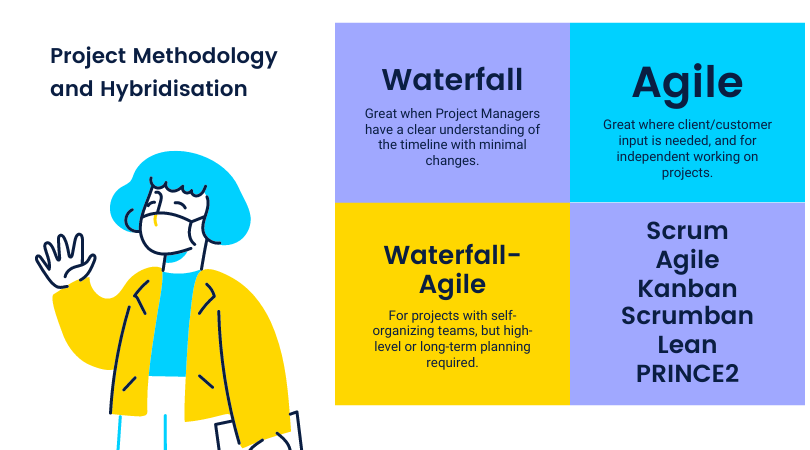
Methodology and Hybridisation
There is no single management methodology an IT PM must adopt. While this may have been true in the past, with multiple levels of work, covering multiple teams, having a one-size fits all approach is limiting.
There have been, and are, multiple methodologies but let’s get one thing straight from the get go; there is no ‘right’ methodology. The best methodology is what makes sense for the IT PM, the team, the project and ultimately the client/customer.
And this means hybridisation. Whether you are working with Kanban, Agile, Waterfall or Scrum, project management methodologies are only the tools that will help deliver projects to completion to customer and stakeholder satisfaction, both on budget and on-time.
It is pretty common to use hybrid methodologies in IT, but it is the project manager’s responsibility to ensure everyone adheres to the adopted approach to achieve project goals and lead times.
AI and Automation
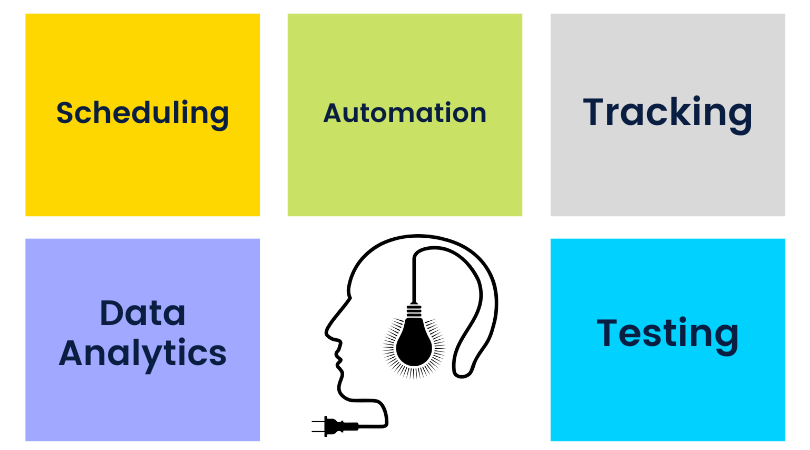
AI driven applications have had a big impact within project management for tasks that can be automated like scheduling, collecting data, tracking data and reporting key aspects. AI can also detect and identify risks.
While there will be some IT PMs concerned about the impacts that automation is having on the industry, the potential is huge. The dilemma is how this technology can improve company performance.
Can it help with training programs and help develop tech knowledge within the business?
For instance automating low-value tasks leaves more time to focus on completing the bigger ones which can benefit the organisation itself. These bigger tasks bring projects closer to achieving their strategic goals.
IT PMs do not have to be experts in AI or data analytics, but having an appreciation of their adaptability can bring costs down and make timescales more achievable for the project.
Budgeting
Is your project going to make a profit? Can it be delivered on time and within budget? For a project to be successful profitability, cost and resource planning need to be carefully analysed.
This means that clear SLAs need to be agreed, especially when third party clients are involved, and clear budgeting scope must be disclosed to other stakeholders in the organisation. Issues include labour cost projections, testing times, conflict between estimated cost and real time cost.
Diminishing Talent Pool
If you’ve been reading any of our monthly IT Jobs Reports during last year and into 2024, then you’ll be aware of the insidious trend toward a candidate-driven market. There are more jobs than qualified candidates.
For IT PMs this will mean identifying skill shortages within their teams sooner rather than later. But identifying talent gaps is one thing, being able to get the right talent in to support project scope and timescales is another.
Obviously one option is finding that talent in-house, and this might be viable, depending on the size of the organisation and the breadth of the technical testing available. But if the talent isn’t there or the skills aren’t available then IT PMs can always call on the expertise of an IT recruiter like Ascent People.
The ability to find hard-to-fill roles with experienced and talented programmers, business analysts, developers and testers by IT recruiters with decades of industry experience and contacts to call on can be a vital resource for IT PMs.
Conclusion
When an IT PM knows the main challenges within their own organisation, it can ensure smooth project timescales, issue-free delivery and ultimately the success and profitability of the product itself. Information Technology is as reactive as it is intuitive and the balance between the potential issues of a project and the actual management brought in by the IT PM can provide support, balance and centralisation, in a world where no one is working physically together anymore.

Have Your Say